Thursday, July 15, 2010

time management skillz needed

Oh how I've got so much to do. I've got like three part-time activities going right now, which is the equivalent of one and a half jobs. I either need some time management advice, less commitments, or a drug that turns me into a machine so I can just do things one after the other.

My occupations right now are a media policy fellowship, graduate school (MLIS program) and serving on the board of directors for a nonprofit organization. All of which require a combination of reading, research, writing, travel, networking and a lot of e-mailing.

So in that spirit, here are some time management tips from the Mayo Clinic, abridged:

  • Plan each day.
  • Prioritize your tasks.
  • Say no to nonessential tasks.
  • Delegate.
  • Take the time you need to do a quality job.
  • Break large, time-consuming tasks into smaller tasks.
  • Practice the 10-minute rule.
  • Evaluate how you're spending your time.
  • Limit distractions.
  • Get plenty of sleep, have a healthy diet and exercise regularly.
  • Take a time management course.
  • Take a break when needed.

Sunday, July 11, 2010

Pitt MLIS first visit


The MLIS Cohort 10 met in person for the first time on Friday and Saturday at the University of Pittsburgh campus. This was quite a treat -- it brought everything home. The experience really did connect our virtual learning environment with the traditional, physical learning structure, and being on campus made me feel part of the campus.

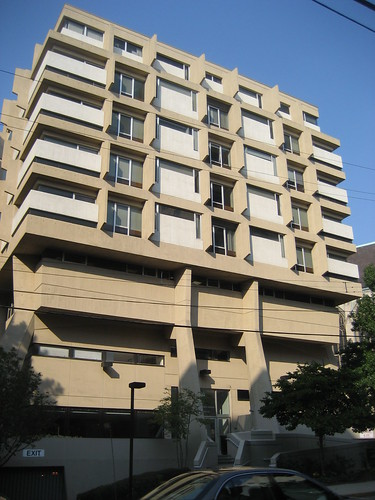
Here is a picture, taken from Google Images, of the Information School building on Bellefield Avenue. The poured concrete building has architectural flaws, in both design and function, but that's okay. It was built in 1962, we were told, and is in the Brutalist style.

The other part about being a Pitt student is the education is in Pittsburgh, probably one of my favorite US cities. I was introduced to Pittsburgh last year when I went there to attend a wedding, and I was impressed with the city. Cool vibe, energy, pace, and people. I was happy to return this year and I liked it even more. I went to the highest floor in the Cathedral of Learning (36th?), and walked around campus.


Here is a shot of the Oakland neighborhood, where the Pitt campus is, in P-Town.


Thursday, July 1, 2010

Copycat bills of AZ SB 1070 in other parts of US

I am 100 percent against the Arizona immigration bill, SB 1070, which sets a precedent of police state tactics and discrimination. Here is a map by Kristopher Fortin that illustrates where other bills inspired by Arizona are emerging or being debated.


View States and politicians considering bills similar to SB 1070 in a larger map

Tuesday, June 29, 2010

When libraries needed space

In 1978, Appleton, Wisconsin, library officials argued for an upgraded library space. This video is from the 1978 slide show, with new narration, but it is a good overview of traditional library functions and the perennial problems of space limitations due to growing collections, added staff.

"There is little room for modern technology..."

Libraries of the future: "urban information bar"

This video, posted last year, is based on an architectural thesis about how the concept of a library may look in the future. The video covers much of what we are reading about and learning in the first-term Pitt MLIS classes. It's all here -- the transformation of data from analog to digital, the digital divide, and networked communities.


Monday, June 21, 2010

File under #inevitable: price of e-readers cut

According to a New York Times story today, Barnes & Noble and book selling rival Amazon.com are reducing the price of their digital book readers by $60-$70.

Barnes & Noble, the national bookseller, announced Monday that it was dropping the price of its six-month-old Nook e-reader to $199 from $259 and introducing a new version of the device, which connects to the Internet only over Wi-Fi networks, for $149.

Responding rapidly, Amazon.com then cut the price of its popular Kindle e-reader below the Nook, to $189 from $259.


The companies are competing with Apple's iPad. The move signals another shift toward an all-digital world replete with increasingly affordable platforms that will enable us to easily access news and information.

For library professionals, this also means funds may have to be spent on purchasing these to loan to patrons or to use on site. These Internet-ready devices, which have surface dimensions the size of your average book, could clear not only book shelving space but clunky computer space, too.

Wednesday, June 16, 2010

YouTube and Guggenheim partner for cultural populism

YouTube and the Guggenheim Museum have partnered in a project to pick 20 YouTube videos that will be included in a museum show, according to The Washington Post.

Nancy Spector, chief curator of the Guggenheim Foundation, calls the collaboration an opportunity to see how new technology platforms might change the video art form. "We are, in a sense, inviting people to raise the standards" of YouTube, she says. "This is aspirational for people who are interested in seeing their work be taken artistically."
YouTube brought musicians together from around the world last year in the first collaborative orchestra and the arts project runs along the same mission: Discover talent where you normally would not find it and make art where you normally would not. This project signals a positive trend in building relationships on the Web and pushing the boundaries of artistic inclusion.